By Jaira Lou Batangan and Ramon Timothy Bautista
Beadles represent two different sides in a law school classroom setting. First, they are the points of contact of every professor. They communicate announcements and coordinate with the class on matters involving the subject throughout the semester. Second, they represent the whole class. Beadles voice out the academic struggles and concerns of their classmates and ensure that the whole class meets eye-to-eye with the professor. For both the professor and students, beadles serve as coordinators, the communicators, and even leaders. They maintain the harmonious relationship of all those who are involved in the classroom for a smooth-sailing learning experience.
This practice is deeply grounded in the culture of law students because they tend to spend a majority of their time interacting with classmates and professors, especially now that the pandemic has transferred the school community to an online set-up. Doing their jobs can greatly affect the relationship between the class and the professor, especially how the professor generally treats the class. Communication made easier has allowed for more opportunities in building connections through online messaging.
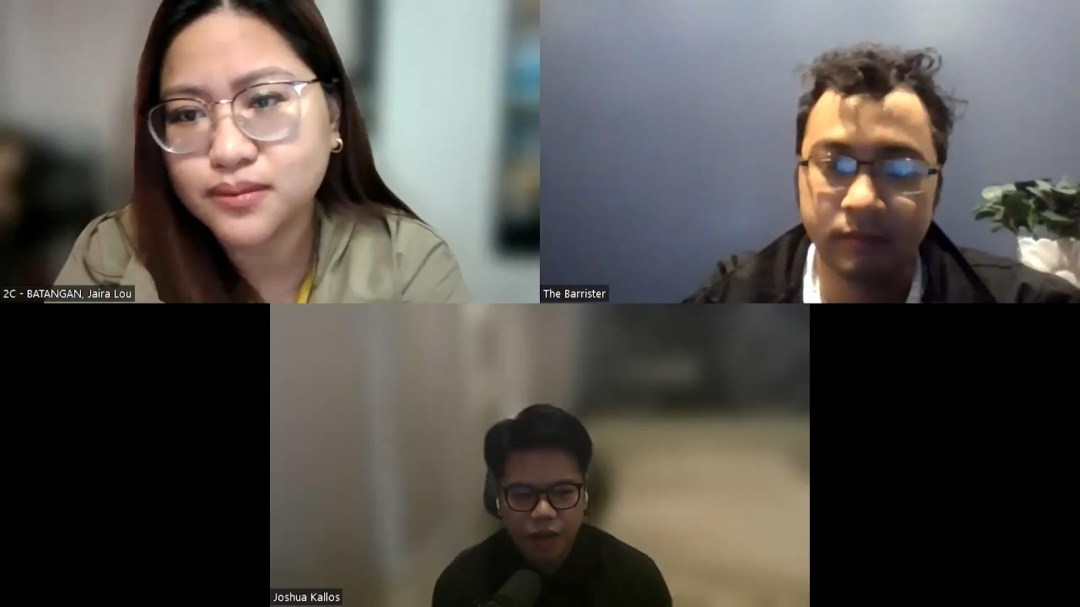
Jay Emmanuel Lagamia, current subject beadle in Transportation and Public Utilities Law, thinks that being a beadle during the pandemic is challenging. He describes it as being the first line of defense the students have.
“When there are concerns, you communicate them to the professor. Moreover, on top of your studies you still have this ‘beadleship’ you have to worry about, and that is challenging with respect to time management,” he said in an interview with thebarrister.
It gets frustrating at times when there is a lack of communication among the members of the class. Joshua Kallos, a second year head beadle, observed that they need to be attentive because of the demand and number of announcements they have to disseminate, “and when members of the class don’t cooperate, it adds more work b, of course. It’s an added responsibility.”
With the prospect of switching back to face-to-face classes next semester, the task of beadleship is expected to be a little different in terms of the time frame and the setting.
Kallos thought that the job could be more exciting and easier than it is because “if we are on a face-to-face set-up, it would bring us closer together, it would bring a stronger bond among the members of the class. There would be more cooperation. Ignoring the messages would be avoided.” Lagamia, meanwhile, stated that “people would be more reachable, although it would demand more of your energy and time.”
When one is a beadle, he might find himself in a situation where he is concerned with the well-being of others—he makes sure everyone’s needs are met, and he cares for each member of the class. Of course, this role is not without advantages, as one may also become more responsible in managing his time and have an opportunity to sharpen his leadership skills.
All in all, whether in an online set-up or not, beadles are the first line of defense in terms of academic-related matters; they can be relied on to make the communication easier and more comfortable.
Meanwhile, the Student Affairs Society (SAS) is an organization tasked to assist in the enrollment system of the College of Law. They are primarily tasked to answer inquiries regarding school policies, rules on retention schedule of enrollments, and academic standings of the students. Members of the organization schedule the enrollment, prepare the forms, process them to ensure that there is no conflict of schedule, and to check for available slots per section. There is also a committee that is assigned to coordinate with the Dean’s office that is in charge with the requests for changing of sections for working students.
Owen Sabalberino Apilado, a member of the Enrollment Committee, described the current enrollment system as far from being convenient and farther from being perfect. Having joined the Student Affairs Society prior to the pandemic, he thinks that the current enrollment system is less chaotic and less problematic compared to the face to face setting. During those times, Apilado, together with his co-workers, were able to learn to bond with one another by having lunch together and bonding over their favorite milk teas and most hated Kdramas. These are some of the moments that made SAS a family for its members.
The most difficult problem, according to Apilado, that the organization has faced is the lack of members because all of them are currently fourth year students.
Apilado recalled that when the online enrollment system was implemented, there were only five of them to manage the entire enrollment system. Fortunately, they were able to increase membership. Another difficult part is being objective. There was one instance wherein a student was crying over the phone as her working schedule is incompatible with her class schedule and she cannot afford to lose her job. Another one was when his own classmate and kababayan was asking for a slot in a section that he was eying to enroll in. Hard as these situations may seem, exercising objectivity is of the utmost necessity, especially in following the rules and understanding that there are matters that are beyond their pay grade. Apilado also recommended that the enrollment period should be extended to address the backlogs and urgent problems of the enrollment process.
For law students, in the administrative side, SAS serves the frontline. Its members are the ones committed to ensure an efficient enrollment system and listen to the suggestions of both students and the admin. Together with the class beadles, they are glad to help the administrators, professors, and students to lighten the workload as well as ensure that all accommodations are extended and the needs of the community are met.
 THE BARRISTER